
There’s been a recent increase in cases of acute hepatitis in children with unknown or unexplained causes. This mystery has gained the attention of many researchers in the medical community, raising many questions and hypotheses regarding the possible cause of this disease in children.
Researchers believe this is not a new disease and has existed in history since 1921–1922. At that time, sporadic cases of hepatitis in children had occurred, along with the high risk of jaundice in various regions of the United States. Clinicians at that time analyzed seven hundred cases of patients, and certain symptoms of the disease were similar to those of the current outbreak. Researchers then suspected that these cases might be connected to the 1918 influenza pandemic as the symptoms for both times were similar (some of which include fever, anorexia, vomiting, nausea, abdominal pain, constipation, or clay-colored stools, and bile-stained urine). 1
How about now? Why is it happening again? Does it have a direct relationship with the COVID- 19 pandemic? Is it widespread? We’ll try to answer these questions one by one.
This blog focuses on the known facts about the latest outbreak and provides several possible causes for its emergence based on research studies.
The first report of such cases came from central Scotland, of 10 cases of acute hepatitis with an unknown cause, reported by the United Kingdom on April 5, 2022, to the World Health Organization’s (WHO) International Health Regulations (IHR) National Focal Point (NFP).
These cases were found in children under 10 years of age. Until June 30, 2022, 21 countries in Europe had reported 473 cases of acute hepatitis for an unknown reason to the WHO. The figure below represents the names and numbers of cases reported by these countries. 2
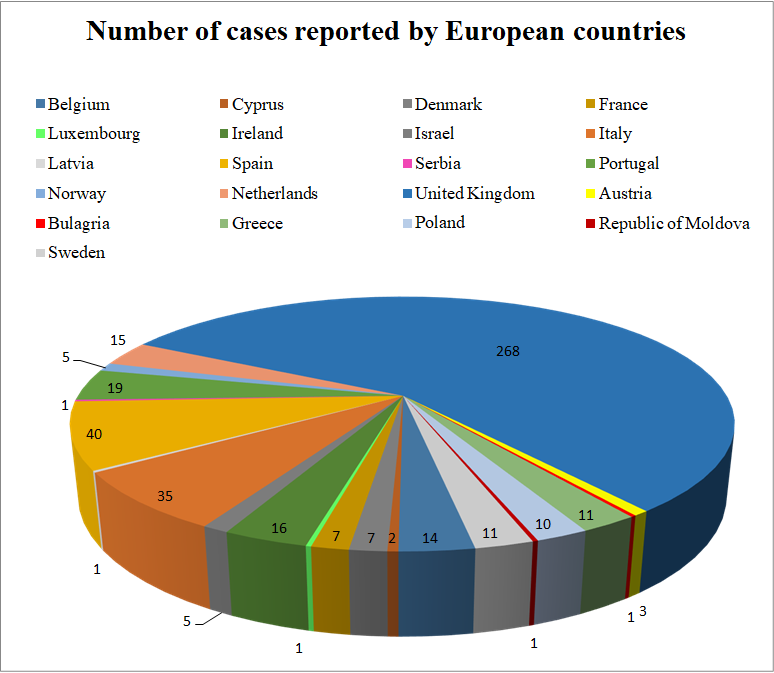
Other than Europe, various regions of America have also reported 383 cases, which include 305 cases from the United States of America. The Western Pacific region (n=61) and Southeast Asia region (n=14) have also reported such cases of acute hepatitis of unknown cause. Moreover, according to WHO, if similar cases were counted since October 1, 2021, then the total count would be 920 cases worldwide. 3
If that’s the case, then it is high time to find the exact cause of this disease to protect the children from unexplained happenings. Although the researchers have proposed several of hypothetical analyses of the causes, only a few of them appear to be true.
Since UK physicians raised the alarm about unusual occurrences of hepatitis that appeared to be affecting young infants, experts have been actively working to identify the reason. There are many hypotheses as to the cause of this disease, which include adenovirus infection and COVID- 19 (acute hepatitis A, B, C, D, and E have not been considered according to the tests conducted).
In addition, according to a research study, most of the children aged <5 years in the UK hadn’t received the vaccination for COVID-19; however, 70% of them had tested positive for adenovirus as it was detected in their blood and stool samples. A few of them were co-infected with some varieties of other viruses like enterovirus, cytomegalovirus, and the Epstein-Barr virus. 1
To analyze this study, we shall discuss the interim analysis conducted by the Centers for Disease Control and Prevention (CDC) of the United States (US).
CDC issued a health advisory to US physicians on April 21, 2022, to report all cases of unknown hepatitis in children aged <10 years to public health authorities. As a higher fraction of cases were reported having adenovirus infection, the physicians were advised to include adenovirus testing in their treatment and diagnosis.
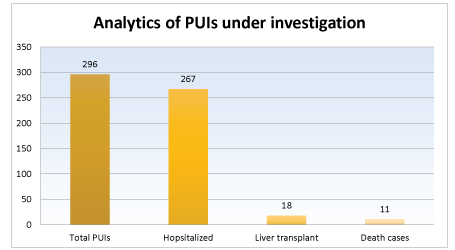
In order to achieve the analytical explanation, medical charts and interviews of the patient caregivers were analyzed for patients who fall under the criteria of investigation (Patients under investigation [PUIs]). As a result, a total of 296 PUIs were analyzed and reported from 42 US jurisdictions on June 15, 2022. According to the report, the majority of PUIs were hospitalized, which accounts for 89.9% of them; 6.1% (18) of them required a liver transplant; and 3.7% (11) of them died.
Moreover, 44.6% (100) out of 224 patients tested positive for adenovirus as detected in their respiratory, blood, and stool samples. In the case of COVID-19, 10.2% (10 out of 98) of patients were detected with a current infection of severe acute respiratory syndrome- coronavirus 2 (SARS-CoV-2), and 26% (32 out of 123) were found with past infection of the same. 4
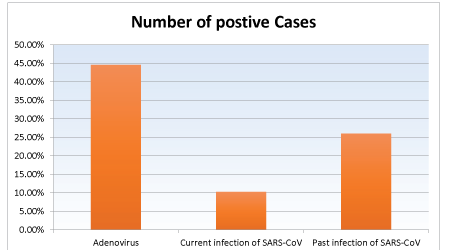
From these results, one cannot conclude the exact cause of hepatitis in children. Even if COVID- 19 infection is associated with the cause, the numbers are still less.
The subtype of adenovirus suspected of causing the infection is subtype 41. On May 6, 2022, the UK Health Security Agency (UKHSA) provided a technical briefing stating that all cases in the UK that underwent adenovirus typing resulted in adenovirus type 41. Not only this, 5 children diagnosed with hepatitis in Alabama who underwent typing revealed adenovirus type 41 in their samples. 5 Although adenovirus infection accounts for a higher proportion of the cause of this disease, researchers still deny that adenovirus is the fundamental reason behind this disease in children. There are several clues available, but there are still no answers yet.
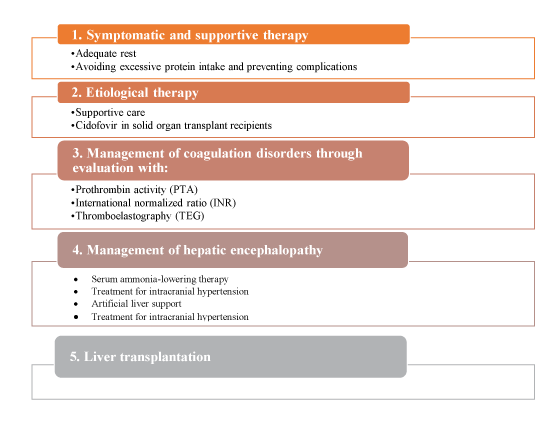
The treatment strategy for it is not definitive, and there’s still a lack of proper healthcare practices to resolve the issue. However, several treatments are being used to save the lives of pediatric patients. The figure below represents these treatments. A sequential treatment plan is advised based on the severity of the condition. 6
The outbreak of unknown causes of hepatitis is characterized by the worldwide pattern of centralized incidences with no epidemiological linking. The etiology of this disease is still unknown; however, adenovirus is somehow related to these cases. Perhaps the complete characteristics of adenovirus are yet unknown. Deeper research and learning are required to pinpoint the whole situation.
Reviewer:Manisha
Copyright © 2025 All Rights Reserved